Visa
Can you work remotely on a French visitor visa?
The safest answer is no. France's visitor route is for people staying for private reasons without professional activity, so passive income can fit but active remote work usually does not.
Get a personalized guide to retiring in France, tailored to your situation. Join the FranceRetire app.
Clear guides on visas, healthcare, taxes, budgets, mobility, and where to live in France.

Visa
The safest answer is no. France's visitor route is for people staying for private reasons without professional activity, so passive income can fit but active remote work usually does not.

Visa
For many Canadian retirees, the hardest part of the French visitor-visa file is not the form. It is turning CPP, OAS, pensions, RRSP or RRIF withdrawals, savings, and healthcare planning into a simple, readable French-side budget.

Visa
For many Australian retirees, the hardest part of the French visitor-visa file is not the form. It is explaining superannuation, pension income, savings, and healthcare cost in a way the French authorities can understand quickly.

Visa
For many British retirees, the hardest part of the French visitor-visa file is explaining resources clearly. The strongest file turns pensions, drawdown, savings, and health-cover planning into a simple, readable retirement budget for France.

Visa
For many Americans, the hardest part of the French visitor-visa file is not the form. It is proving that retirement income, savings, and healthcare costs add up to a stable life in France without working.

Visa
France does not have a general retirement visa. For most Americans retiring in France without working, the normal route is the VLS-TS long-stay visitor visa, followed by renewable visitor residence permits.

Visa
Most British retirees moving to France after Brexit use the VLS-TS visitor visa. It is the standard route for someone living from pensions, savings, and other non-working income while agreeing not to work in France.

Visa
Most Australian retirees moving to France use the VLS-TS visitor visa. It is the standard route for someone living from superannuation, pensions, savings, and other non-working income while agreeing not to work in France.

Visa
Most Canadian retirees moving to France use the VLS-TS visitor visa. It is the standard route for someone living from CPP, QPP, OAS, employer pensions, RRSP or RRIF withdrawals, savings, and other non-working income while agreeing not to work in France.

Visa
The first-year VLS-TS is usually followed by an in-France renewal of visitor residence status through ANEF. The key is to file within the official window, show that you still meet the visitor conditions, and keep the file clean and consistent.

Visa
The first 90 days are when a move to France becomes a clean administrative record. The priorities are VLS-TS validation, address proof, healthcare continuity, banking, document storage, tax records, and early renewal and driving planning.

Healthcare
Australian retirees usually reach French healthcare in two stages: comprehensive private insurance for the visa and first months, then residence-based public healthcare through PUMa after stable and legal residence is established.

Healthcare
A mutuelle is French supplemental health insurance. For Australian retirees, it normally becomes relevant only after French public-healthcare rights are active and helps reduce the remaining costs left by the reimbursement system.

Healthcare
Most Canadian retirees reach French healthcare in two stages: comprehensive private insurance for the visa and first months, then residence-based public healthcare through PUMa after stable and legal residence is established. A qualifying Quebec retiree may have a separate route through the France-Quebec agreement.

Healthcare
A mutuelle is French supplemental health insurance. For Canadian retirees, it usually becomes relevant only after French public-healthcare rights are active, whether through ordinary PUMa or the special Quebec route.

Healthcare
A mutuelle is French supplemental health insurance. For many British retirees, it still matters even with an S1 because French healthcare reimburses according to official tariffs and does not remove every remaining cost.

Healthcare
British retirees in France usually follow one of two routes: S1-funded healthcare for qualifying State Pension recipients, or private insurance first and then PUMa for early retirees who are not yet eligible for an S1.

Healthcare
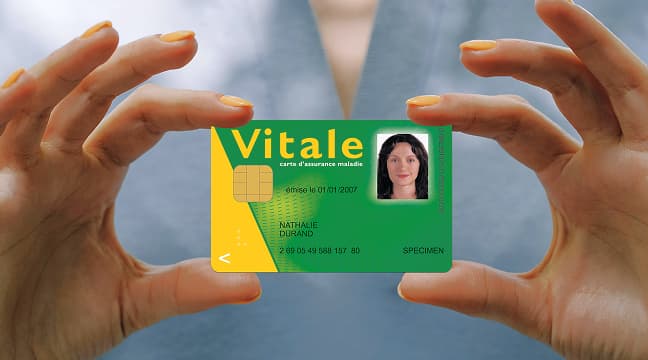
The Carte Vitale comes after healthcare rights, not before. For most retirees, the real sequence is legal residence, valid transition cover, CPAM affiliation, attestation de droits, social-security number, and only then the green card itself.

Healthcare
A mutuelle is French supplemental health insurance. For most American retirees, it becomes relevant after French public healthcare rights are active and helps reduce the remaining costs left by the reimbursement system.

Healthcare
Healthcare is one of the strongest reasons to consider retirement in France, but new American retirees do not automatically receive free healthcare on arrival. Most start with private insurance, then enter the French system through PUMa after establishing stable and legal residence.

Tax
French inheritance planning can affect who inherits, which law applies, and what tax is due in both France and the United States. For American retirees, the big risk is assuming a U.S. estate plan automatically solves the French side.

Tax
Moving to France does not take an American retiree out of the U.S. tax system. In many cases the U.S.-France tax treaty prevents true double taxation, but you still need to classify each income stream correctly and report it in the right place.

Tax
French inheritance planning can affect who inherits, which law applies, and what tax is due in both France and the United Kingdom. For British retirees, the main risk is assuming familiar U.K. tools automatically work the same way in France.

Tax
A British retiree who becomes French tax resident usually shifts most pension income into the French tax system, while some U.K.-source items such as government-service pensions and rental property can remain taxable in the U.K. and still require French reporting.

Tax
An Australian retiree who becomes French tax resident will usually shift most worldwide income into the French tax system, while some Australian-source items such as government-service pensions and Australian real estate can remain taxable in Australia and still require French reporting.

Tax
French inheritance planning can affect who inherits, which law applies, and what tax or estate-administration issues can arise in both France and Australia. For Australian retirees, the main risk is assuming that no classic inheritance tax means no planning is needed.

Tax
A Canadian retiree who becomes French tax resident will usually shift worldwide income into the French tax system, while some Canadian pensions, property income, and property sales can remain taxable in Canada and still require French reporting.

Tax
French inheritance planning can affect who inherits, which law applies, and what tax can arise in both France and Canada. For Canadian retirees, the main risk is assuming that no classic inheritance tax means there is no tax or treaty issue at death.

Tax
The first French tax return is where many U.S. retirees realize they still have to file in two systems at once. The key issue is not just tax due. It is classifying each income source correctly, filing the French forms properly, and coordinating treaty treatment with the ongoing U.S. return.

Tax
The first French tax return is where many British retirees discover that France and the U.K. run on different calendars, different residence tests, and different reporting logic. The key risk is not just tax. It is reconciling two systems cleanly in the move year.

Tax
The first French tax return is where many Australian retirees discover that the move to France did not erase Australian tax questions. The key risk is not just tax due. It is handling superannuation, CGT history, property, and treaty classification correctly in the first filing year.

Tax
The first French tax return is where many Canadian retirees realize that the move to France did not simplify filing. The key risk is not just tax due. It is handling departure facts, registered-account treatment, and treaty classification correctly from the first French filing onward.

Driving and mobility
Yes, but the answer changes when you become a resident. The critical issue is not whether your license is American. It is which state issued it and whether France allows that state license to be exchanged.

Driving and mobility
Yes. A British visitor can normally drive in France with a valid U.K. licence, and a British resident can also keep driving, but the long-term rule now depends heavily on when the current licence was issued.

Driving and mobility
Yes. A Canadian visitor can drive in France with a valid provincial licence plus the right language support, and a Canadian resident can usually drive for one year before long-term rights depend on province-specific exchange eligibility.

Driving and mobility
Yes. An Australian visitor can usually drive in France with a valid physical Australian licence plus an International Driving Permit or official French translation, and an Australian resident can usually use the licence for one year before exchange becomes mandatory.

Budget
There is no single savings number for retiring in France. The right amount depends on monthly spending, whether income is already covering the budget, healthcare timing, housing, visa logic, exchange-rate risk, and how much margin you want against mistakes.

Budget
Yes, a single retiree can make $2,500 per month work in the right parts of France, but housing, healthcare transition costs, taxes, and exchange-rate risk decide whether the plan is actually resilient.

Budget
A$2,500 a month can work only in a fairly narrow set of circumstances. For a single person with solved housing and savings it may be possible, but for a market-rate renter it is usually extremely tight and for a couple it is generally not realistic.

Budget
C$2,500 a month is only a narrowly workable France retirement budget for a Canadian with favourable housing, modest spending, and meaningful reserves. For a normal renter it is usually too tight, and for a couple it is generally not sustainable.

Budget
GBP2,000 a month can be a realistic French retirement budget for one British retiree in the right town, but it is usually too tight for a renting couple and it becomes much stronger when S1 healthcare or mortgage-free housing is already in place.

Lifestyle
Yes, you can retire in France without speaking French. But life is usually easier, safer, and less isolating if you build at least practical A1 to A2 French during the first year and work toward real B1 independence over time.

Lifestyle
Opening a French bank account is usually possible for foreign retirees, but the process gets much easier once you have a stable French address, a clean document file, and a clear reason for the account.

Property
Foreigners can buy property in France, but buying a home does not create residence rights. For most retirees, the safest sequence is still to rent first, understand the region and the process, and buy only after the location and ownership structure make sense.

Property
For most retirees, renting first for 6 to 12 months is the safer default. It gives you time to test the town, understand healthcare and transport, and avoid turning a holiday property decision into an expensive retirement mistake.